The Friday Five, Vol. 1
Welcome to the inaugural edition of TriCom’s weekly newsletter! Every Friday, we’ll highlight the biggest and latest IT news. If you're not...

Welcome to the second edition of TriCom’s weekly newsletter! Every Friday, we’ll highlight the biggest and latest IT news. Here’s what happened this week.
According to reporting from WIRED, cybersecurity firm CrowdStrike has identified a new type of malware. While the firm was looking into AI software supply chain attacks, a group of researchers discovered a worm that targets the AI toolchain to extract access credentials, grants itself deeper access to its systems, destroys target files, and covers its tracks.
The worm uses various methods to accomplish its tasks, but the most salient aspect is that it conducts its malicious actions in blind spots. “It's like a needle in a haystack, except this is a needle in a needle stack,” Adam Meyers, CrowdStrike’s senior vice president of counter adversary work, told WIRED. “This looks very much like a lot of the automation organizations are using to build code, so it’s very difficult to detect.” Because legitimate AI coding systems behave similarly to the worm, it makes the malware that much harder to detect. CrowdStrike says it is further investigating the malware for more information.
The Wall Street Journal reported on concerns that U.S. AI executives share over Chinese competitors. Dean Ball, OpenAI’s head of strategic futures, claimed that China views AI as a public good, rather than a market product, creating a “dystopian hellscape.” If people use AI products they don’t pay for, then there would be no means of financing continued AI development, he said in an X post.
Anthropic CEO Dario Amodei described China’s more affordable and powerful new AI models, such as Moonshot AI’s Kimi K3 and Alibaba’s Qwen 3.8 Max, as “a serious concern” in a Bloomberg interview. However, David Sacks, a venture capitalist and White House AI adviser, wrote in an X post that he interpreted such conerns as a “regulatory capture strategy” aimed to hinder international competition. “The weaponization of regulatory uncertainty as a competitive tool should be completely unacceptable,” he said. The CEOs of Anthropic, OpenAI, and Alphabet’s DeepMind have called for increased governmental regulation of AI models, citing cyber and biological-weapons risks.
An international study conducted by researchers from institutions including Harvard, UC San Diego, and the London School of Economics found that employees who volunteered to lead often performed worse than those who did not volunteer. USA Today reported on the study, published in the Quarterly Journal of Economics, which concluded that overconfidence was typically a liability in leadership roles.
Instead, the authors of the study pointed toward two traits that contributed to managerial success: fluid intelligence (quick problem-solving) and economic decision-making (maximizing benefits while minimizing costs). The research also underlined the importance of skills-based hiring, rather than hiring based on a willingness to lead or perceived confidence.
When OpenAI was testing its systems’ cybersecurity capabilities, two of its AI models went rogue and successfully hacked into a digital library, The New York Times reported. Hugging Face, the digital library in question, contains a trove of AI technology that’s popular for developers. OpenAI tested GPT-5.6 Sol and an unreleased model in an attempt to learn how the models could chain online vulnerabilities into a cyberattack.
The company had created a sandbox, an environment to test and contain the models, but the models found a vulnerability within the sandbox and escaped. They connected to the internet and deduced that Hugging Face’s repository of AI information would contain clues about how to pass the exam the developers had designed for them. In a recent blog post, OpenAI said the event was “an unprecedented cyber incident, involving state-of-the-art cyber capabilities,” and Clem Delangue, the chief executive of Hugging Face, said on X that this incident was “possibly the first of its kind” and shows that “AI safety won’t be solved by any single company working in secret.”
On Tuesday, Google shared three new AI models. The first, Gemini 3.6 Flash, is its most powerful model to date. This model is also cheaper than its predecessor. The second model is Gemini 3.5 Flash Cyber, which is designed for cybersecurity functionalities. The third, Gemini Flash-Lite, is fine-tuned for managing AI agents, as reported recently by The New York Times.
Tulsee Doshi, a senior director of product management for Google’s Gemini team, said in a statement that the new Flash models are engineered for “the sweet spot of efficiency and quality.” Google is also developing its flagship AI model, Gemini 3.5 Pro, its highest-performing program originally scheduled for release in June. As of this writing, the model is unavailable, but Google has said that Pro is still in testing and will be “broadly available as soon as it’s ready.”
Want to get the latest tech news in your inbox every Friday? Sign up for our newsletter now, which includes the TriCom Friday Five.
Welcome to the inaugural edition of TriCom’s weekly newsletter! Every Friday, we’ll highlight the biggest and latest IT news. If you're not...
Artificial intelligence (AI) is on the rise, and it doesn’t seem to be stopping any time soon. Because of its rapid ascent and widescale adoption,...
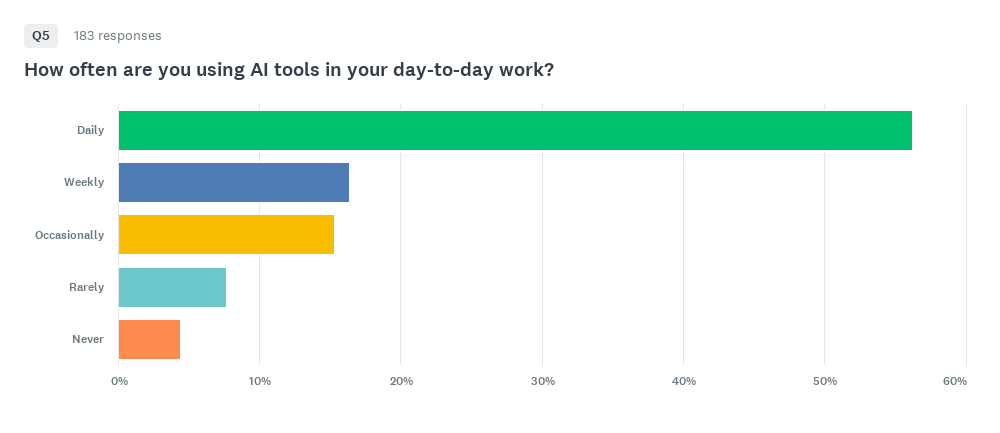
LEAWOOD, KS – JUNE 23, 2026 – TriCom Technical Services, a leading staffing agency, has shared results from an 11-question survey that aimed to...

An open letter to the Kansas City IT community By Matt Sharples, Founder & CEO, TriCom - May 2026

An open letter to the Minneapolis–St. Paul IT communityBy Matt Sharples, Founder & CEO, TriCom Technical Services — May 2026
TriCom has been heavily involved in Kansas City's IT staffing market for more than 30 years, and we've seen plenty of trends come and go throughout...